For any garment-care suggestion, follow the individual care label first. Read our care guide.
Autumn asks for outfits that can keep pace with a cool morning, a sunny afternoon, and the evening chill that arrives before you are ready. The answer is not necessarily another bulky layer. A considered knit, a breathable base, and a little attention to shape can make getting dressed feel comfortable and look intentional. Think in terms of light, adjustable pieces: each layer should add warmth, texture, or structure without hiding the one beneath it.
Begin with a close, comfortable base
The layer closest to your skin sets the tone for everything above it. Choose a top that feels smooth and easy under a knit, with enough room to move but not so much extra fabric that it bunches at the waist, cuffs, or neckline.
A simple tank or fine-gauge top can give a cardigan a clean starting point. If the day warms up, you can remove the knit and still feel dressed. Keep the base visually quiet when you want the cardigan to stand out, or use a subtle contrast to bring dimension.
Let one knit do the work
Rather than stacking several thick sweaters, choose one knit with a shape that suits the day. A lightweight cardigan is especially adaptable: wear it open for a relaxed line, or button it when you want a more finished look. The goal is ease, not compression.
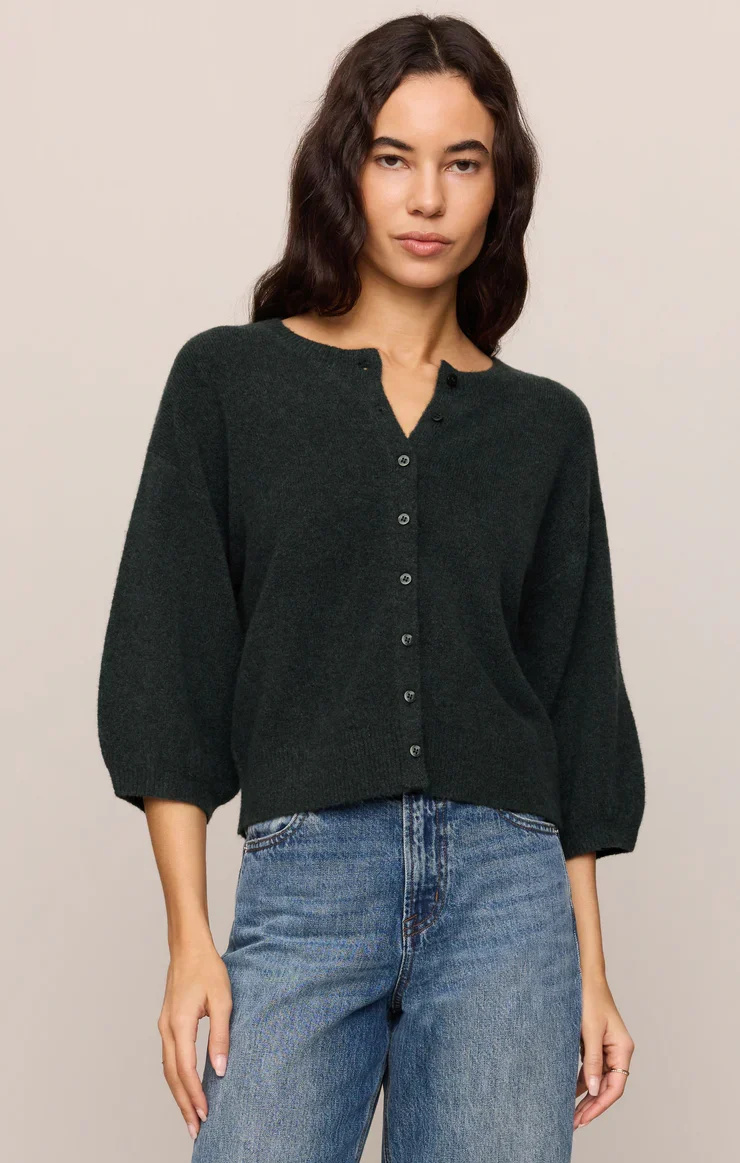
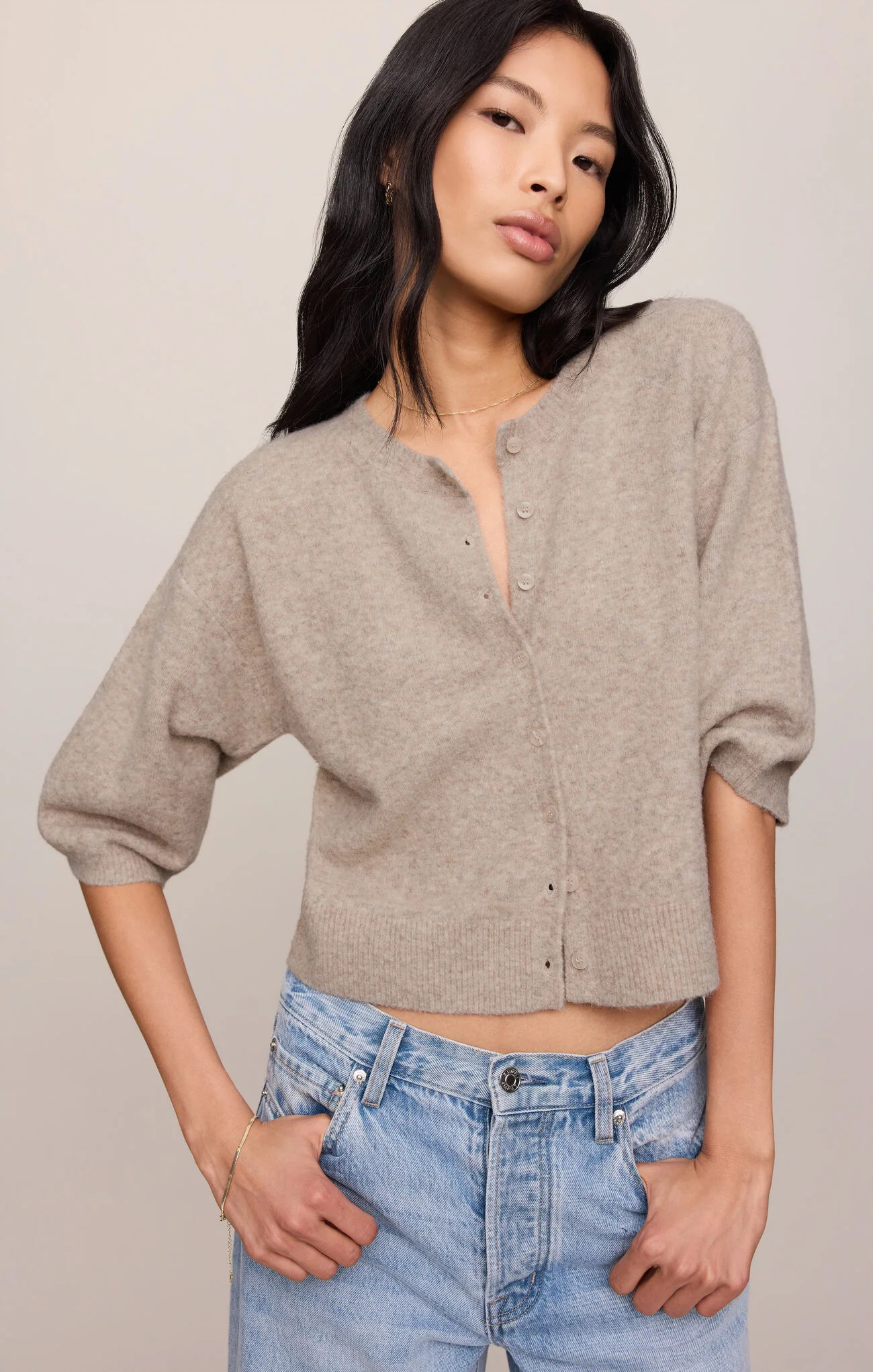
The Valor Cardigan offers a crew neck, button front, and three-quarter sleeves, details that make it straightforward to style over a tank or with denim. Its elbow-length sleeves leave room for movement and help a layered outfit feel less enclosed than a full-sleeve stack.
Balance proportions from top to bottom
A streamlined layer can still feel cozy when the proportions are balanced. Try a cardigan with a closer-fitting base and a more relaxed trouser, or pair a roomy knit with a simpler, straighter bottom. A clear contrast in shape gives the outfit definition without adding bulk.
Pay attention to where hems meet. If the knit and top end at nearly the same point, a small shift in length can keep the middle of the outfit from looking crowded. A partial tuck or an open cardigan can also create a longer visual line.
Use texture and color with intention
Autumn outfits gain depth through contrast, not just through additional layers. A soft knit beside smooth denim, or a muted base under a more textured cardigan, gives the eye something to notice while keeping the overall silhouette light. Keep the number of competing textures modest.
Color can do similar work. Try combining a warm neutral with a deeper autumn shade, or build a tonal outfit using variations of one color family. A restrained palette makes separate pieces feel connected and lets the knit become part of the outfit rather than an isolated statement.
Make the outfit adjustable
The most useful autumn layers are easy to adapt as the temperature changes. Leave a cardigan unbuttoned indoors, then close it outside; carry a light outer layer for a breezier stretch of the day. This approach gives you options without requiring a thick sweater under a heavy coat.
Check how each piece sits when you move, sit, and reach. Sleeves should not feel trapped beneath outerwear, and hems should stay comfortable when tucked or untucked. Follow the care label first; if it recommends hand washing or dry cleaning, use that guidance rather than assuming a knit can go in the machine.
Choose outerwear that leaves room to move
A knit can feel light on its own yet become restrictive beneath a jacket with narrow armholes or a close upper body. When trying the combination, wear the cardigan you expect to layer and zip or fasten the outer piece fully. Reach forward and lift your arms; if the knit pulls or gathers, choose a roomier cut rather than adding a thinner base to compensate.
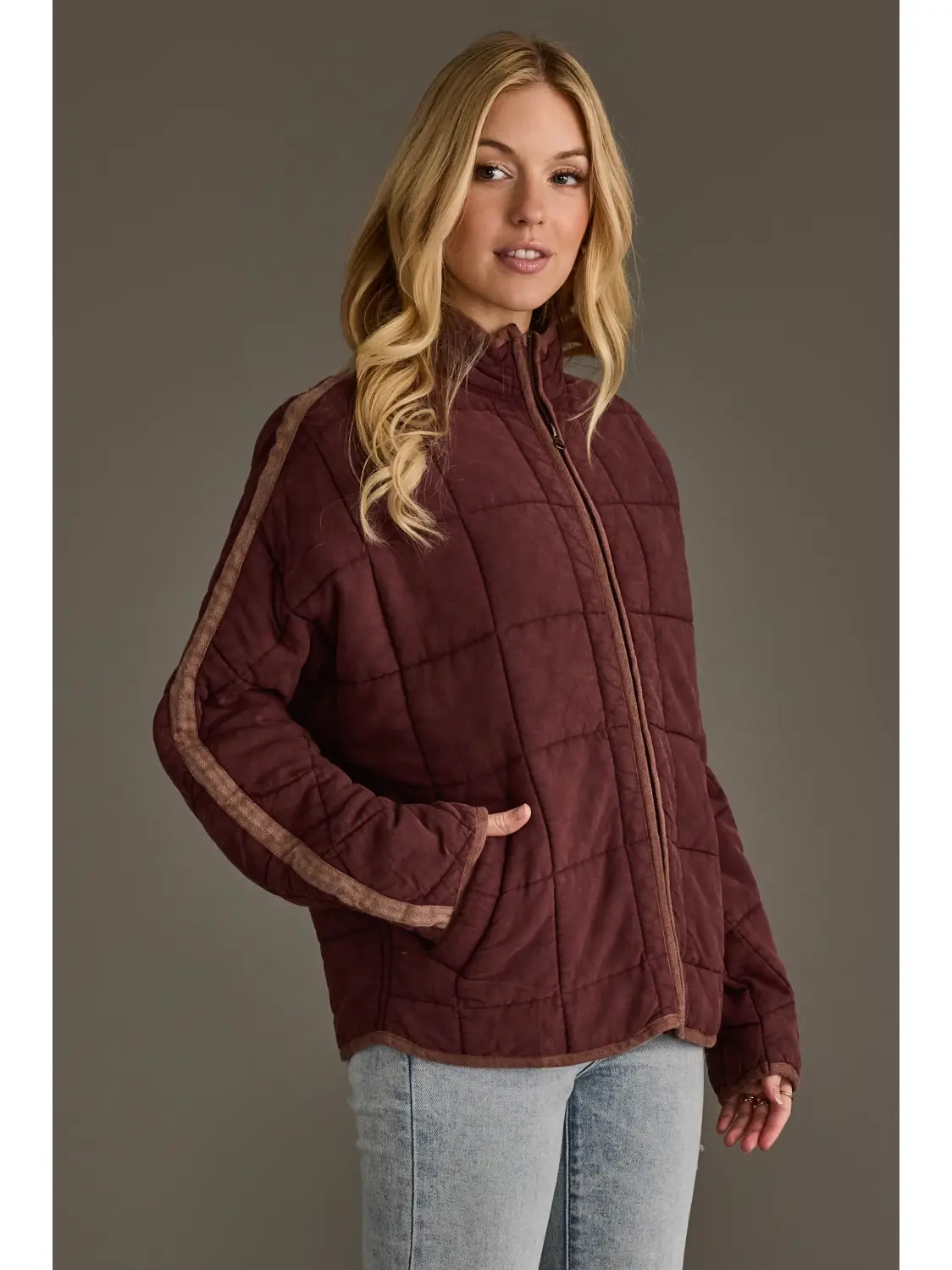
Sleeve shape matters as much as overall size. Three-quarter sleeves can reduce crowding at the wrist, while a smooth lining or open-front coat can help layers slide into place. The Quinn Jacket is one supplied example of a relaxed-fit jacket, but assess any pairing on your own frame and keep the shoulders comfortable when carrying a bag.
Plan a practical palette for repeat wear
Build a small autumn capsule around the bottoms and outerwear you already reach for. Note their dominant shades, then choose knitwear that works with at least two of those pieces. A cardigan that coordinates with both dark trousers and a lighter denim option will earn more wears than a shade that only suits one carefully planned outfit.
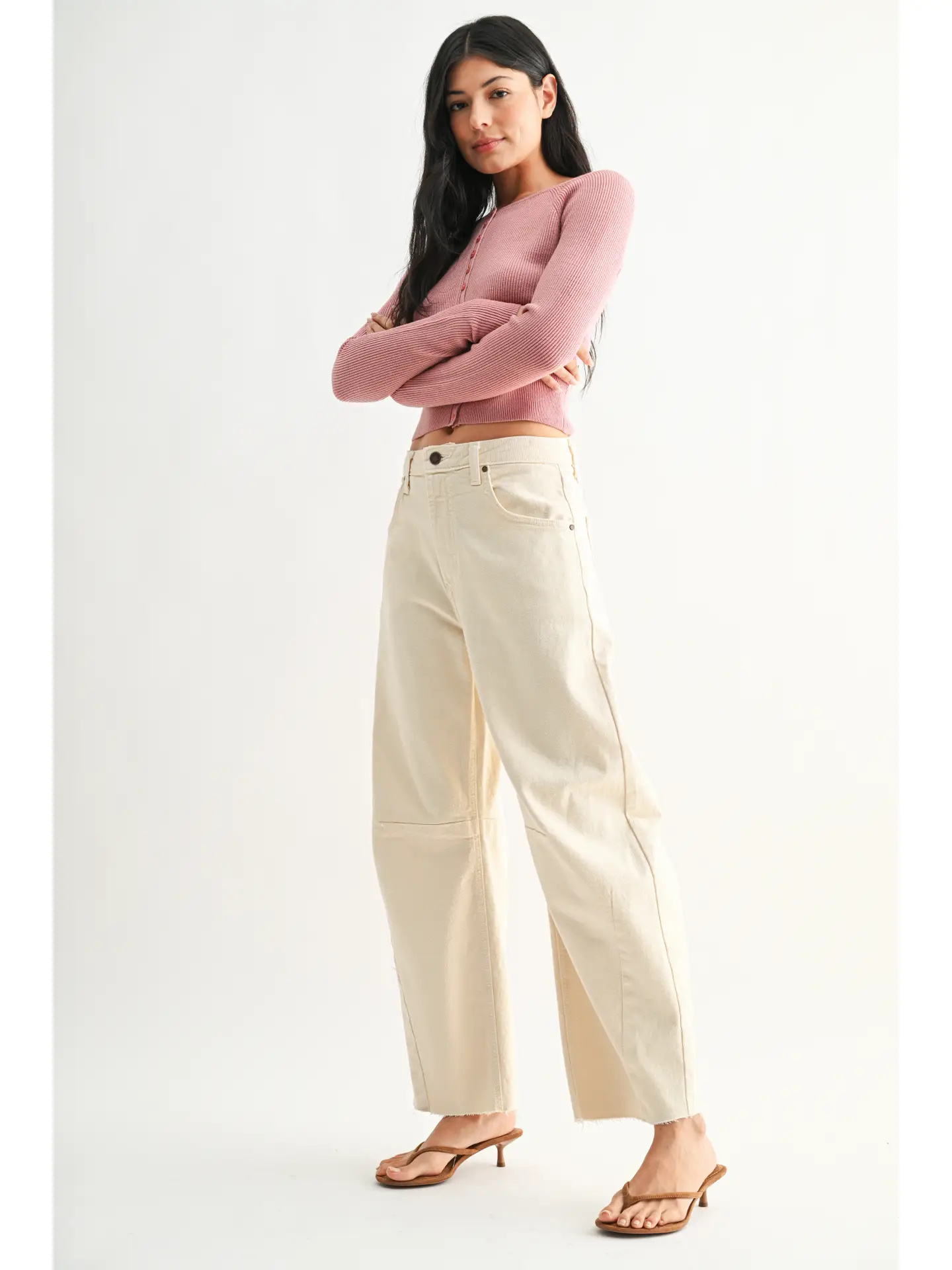
Before buying or dressing, compare colors in natural light; indoor bulbs can make undertones look different. If a knit and bottom are similar in value, separate them with a belt or a visible strip of the base layer, rather than adding another sweater. The warm almond shade of the Raw Hem Barrel Jeans, for example, can sit comfortably beside several earthy neutrals.
Use accessories to finish the neckline
A cardigan’s neckline can look intentional without another layer underneath. With a crew neck, let a neat collar or the edge of a base top show evenly, or keep the opening simple and unobstructed. Check the front in a mirror after buttoning: uneven gaps or fabric caught beneath the placket can make a light outfit appear untidy.
Scarves can add warmth, but choose a fine, flexible style and drape it loosely rather than wrapping several thick turns around the neck. If the cardigan already has buttons and a defined neckline, a compact scarf worn inside an open collar can provide a clear finish without covering the knit’s shape. Keep the ends clear of bag straps and fastenings.
Store knits to preserve their shape
At the end of a wear, give a knit time to air before putting it away, and check pockets and cuffs for lint or debris. For cleaning, follow the garment care label first; when it calls for hand washing or dry cleaning, use that method. Avoid hanging a knit for long periods if its weight makes the shoulders stretch, and fold it neatly instead.
Make space between folded pieces so edges are not repeatedly crushed, and keep storage dry and away from direct sunlight. If a cardigan needs refreshing between wears, use a fabric-safe approach that agrees with its care label and test any tool discreetly. A little attention after wearing helps maintain a tidy wardrobe and makes lightweight layers easier to reach for.
A less bulky autumn outfit is built through thoughtful choices: a comfortable base, one well-chosen knit, balanced proportions, and layers you can adjust. Keep the details simple, let texture add interest, and dress for the day as it is—not just for the first cool breeze.