For any garment-care suggestion, follow the individual care label first. Read our care guide.
Repeating clothes is not the same as repeating the exact same look. With a few dependable pieces and a little planning, you can create a week of repeat outfits that feels varied, polished and suited to the life you actually lead. The key is to start with your calendar, then build combinations around comfort, proportion and practical layers. This approach makes getting dressed easier without requiring a packed wardrobe. It also helps you notice which pieces work hardest, so future outfit decisions become more focused and less dependent on impulse.
Start with the week you have
Before choosing clothes, scan your commitments from morning to evening. Note the days that involve a commute, extended time at home, appointments or a change of setting. The aim is not to dress for an imagined ideal week; it is to plan for the actual activities, temperatures and level of polish each day is likely to call for.
Write down any practical constraints, such as needing comfortable shoes for a long walk or a layer for a cool office. Mark the days that can share a similar outfit formula. This quick audit gives repeat pieces a clear purpose and prevents you from planning combinations that look good on paper but do not fit your schedule.
Choose a compact outfit cast
Select a small group of clothes that can work together: perhaps two bottoms, three tops and one or two layers. Keep the palette connected through neutrals, related tones or a consistent accent color. A limited cast makes it easier to see possible combinations, while enough variation keeps the week from feeling like a uniform.
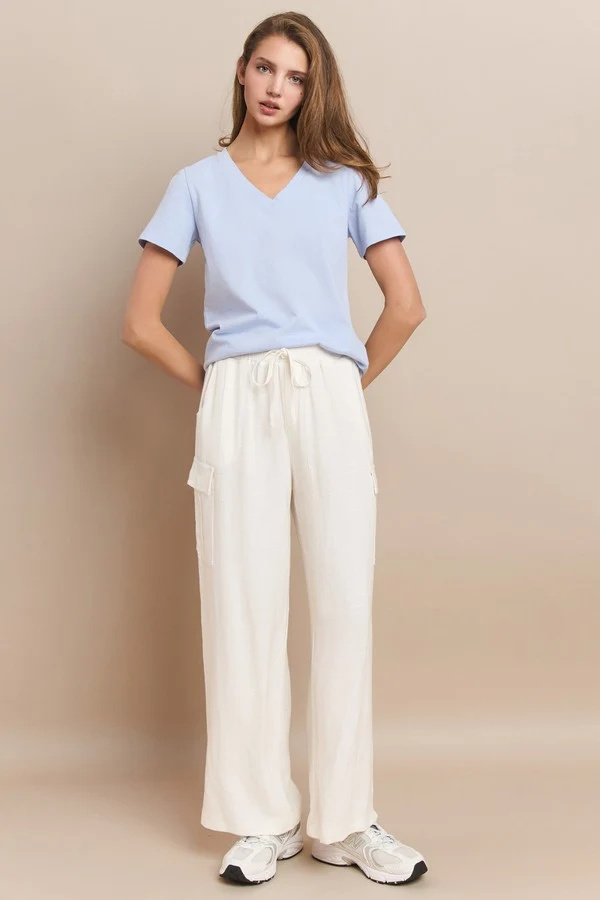
Prioritize pieces you already reach for and can comfortably wear in more than one setting. A short-sleeve V-neck such as The Basic Tee can serve as a simple starting point, while a cardigan may add a distinct layer when needed. Treat these as examples, not a shopping list; use the garments already suited to your routine.
Build reliable outfit formulas
Instead of planning seven unrelated looks, establish two or three formulas. For example, pair a top with straight-leg trousers, then use the same top-and-bottom balance with a different layer or footwear. A formula gives you a dependable outline; changing one element can shift the mood without making the whole outfit feel unfamiliar.
Check each combination in a mirror and consider proportion from head to toe. If a top is relaxed, a more defined shape elsewhere can create balance; if both pieces are loose, think about where the silhouette needs structure. The goal is not to follow rigid rules, but to make each repeat feel deliberate and comfortable.
Repeat pieces, vary the styling
A familiar item can read differently when you change how it is worn. Try a top tucked in one day and left loose another, or use a cardigan open over a base layer before buttoning it on a later occasion. Small styling decisions create visible variety without asking you to add more clothes to the plan.
Keep the changes appropriate to the garment and your comfort. Adjusting sleeves, changing a layer or switching between a casual and more composed shoe can alter the overall impression. Choose only details that feel natural for the setting; a useful repeat outfit should be easy to wear, not a styling exercise that needs constant correction.
Plan layers around changing conditions
Layers help the same base outfit serve different parts of a day. Choose one or two options that work with several combinations, and consider whether they can be carried or removed comfortably. A lightweight cardigan, for instance, can sit over a top or become the main layer when the setting calls for more coverage.
Use the forecast and your indoor routine to guide the plan rather than relying on a single assumption about the weather. Keep a layer near the outfits that need it, and make sure it works with the shoes and bag you intend to carry. This keeps the week adaptable without adding unnecessary backup looks.
Give each outfit a clear role
Assign each planned combination to a particular day or type of commitment. Save the most comfortable option for a long stretch of errands, and choose a sharper combination for a meeting or appointment if that suits your wardrobe. Giving outfits a role makes the plan easier to remember and reduces morning second-guessing.
Avoid treating the schedule as a rulebook. If plans change, move an outfit to another day or swap one piece while keeping the rest of the formula intact. A helpful plan has room for real life: it offers a starting point, not a demand to wear a look that no longer fits the day.
Refresh and care for repeat pieces
Frequent wear calls for a sensible refresh routine. After taking off a garment, check for visible marks, odors or areas that may need attention, and allow it to air between wears when appropriate. Do not assume every piece needs washing after one use; decide according to its condition and the garment’s care label.
Always read the care label before cleaning, and follow its instructions for that specific garment. When a label calls for a particular method, do not substitute a more convenient one without checking. Planning a repeat piece also means leaving enough time for any label-directed care, so it is ready for the next combination.
Lay out the plan and review it
Once the combinations are chosen, write them down or arrange them by day where you can see them. Include the layer and footwear in each note, so the outfit is complete rather than a partial idea. A simple list is often enough: it makes repeats visible and helps you spot a missing piece before the morning rush.
At the end of the week, notice which combinations felt easiest and which needed adjusting. Record useful observations, such as a layer that worked across several settings or a formula that felt restrictive. Use those details to refine the next plan, keeping the pieces and outfit structures that genuinely made dressing simpler.
A week of repeat outfits works best when it reflects your calendar, your comfort and the clothes you already trust. Start with a compact cast, build a few reliable formulas and create variety through thoughtful styling and adaptable layers. Then make room to refresh garments according to their care labels and review what worked. The result is not a rigid capsule or a series of identical looks, but a practical system for getting dressed with greater ease.