
For any garment-care suggestion, follow the individual care label first. Read our care guide.
Shopping by size alone rarely settles the question of why one pair feels balanced and another does not. Rise and inseam are separate measurements, but together they influence comfort, proportion, and how jeans meet your shoes. Start by understanding what each number describes, then compare measurements with a pair you already wear well. Your height can offer clues, but torso length, preferred waistband position, leg shape, and footwear matter just as much. This guide turns those details into a practical fitting process, whether you are browsing a size chart or trying jeans on in person.
Understand what rise and inseam measure
Rise measures the distance from the crotch seam to the top of the waistband, usually along the front of the jeans. A higher number generally means the waistband sits higher on the body, but the finished position also depends on your torso and the garment’s cut. Rise is not a measurement of overall jean length.
Inseam runs from the crotch seam down the inside leg to the hem. It helps estimate where the hem will land, though leg shape, shoes, and the way you wear a waistband affect the result. Check whether a listed inseam is measured on the garment; brands may present sizing details differently.
Measure a pair you already trust
Choose jeans whose waistband and hem sit where you want them, then lay them flat without stretching the fabric. Smooth the front and back into their natural shape. Measure the front rise from the crotch seam to the top edge of the waistband, following the seam rather than measuring straight through the air.
For inseam, start at the crotch seam where the inside-leg seams meet and follow the inner seam to the hem. Record the result in inches or centimetres and note the shoes you wore with that pair. A familiar garment provides a more useful reference than a body measurement taken without a consistent method.
Choose waistband placement by feel
Consider where you want the waistband to rest when you sit, stand, and bend. A higher rise may offer more coverage and bring the waistline closer to the natural waist; a lower rise sits farther below it. Neither is automatically more comfortable. The right placement is the one that stays put without digging or needing constant adjustment.
When trying jeans on, check the waistband in motion rather than judging it from a mirror alone. Sit down and take a few steps. Notice whether the front pulls, the back gaps, or the crotch feels restrictive. These cues can reveal a rise mismatch, but they may also indicate that the cut or size needs reconsidering.
Read rise numbers as comparisons
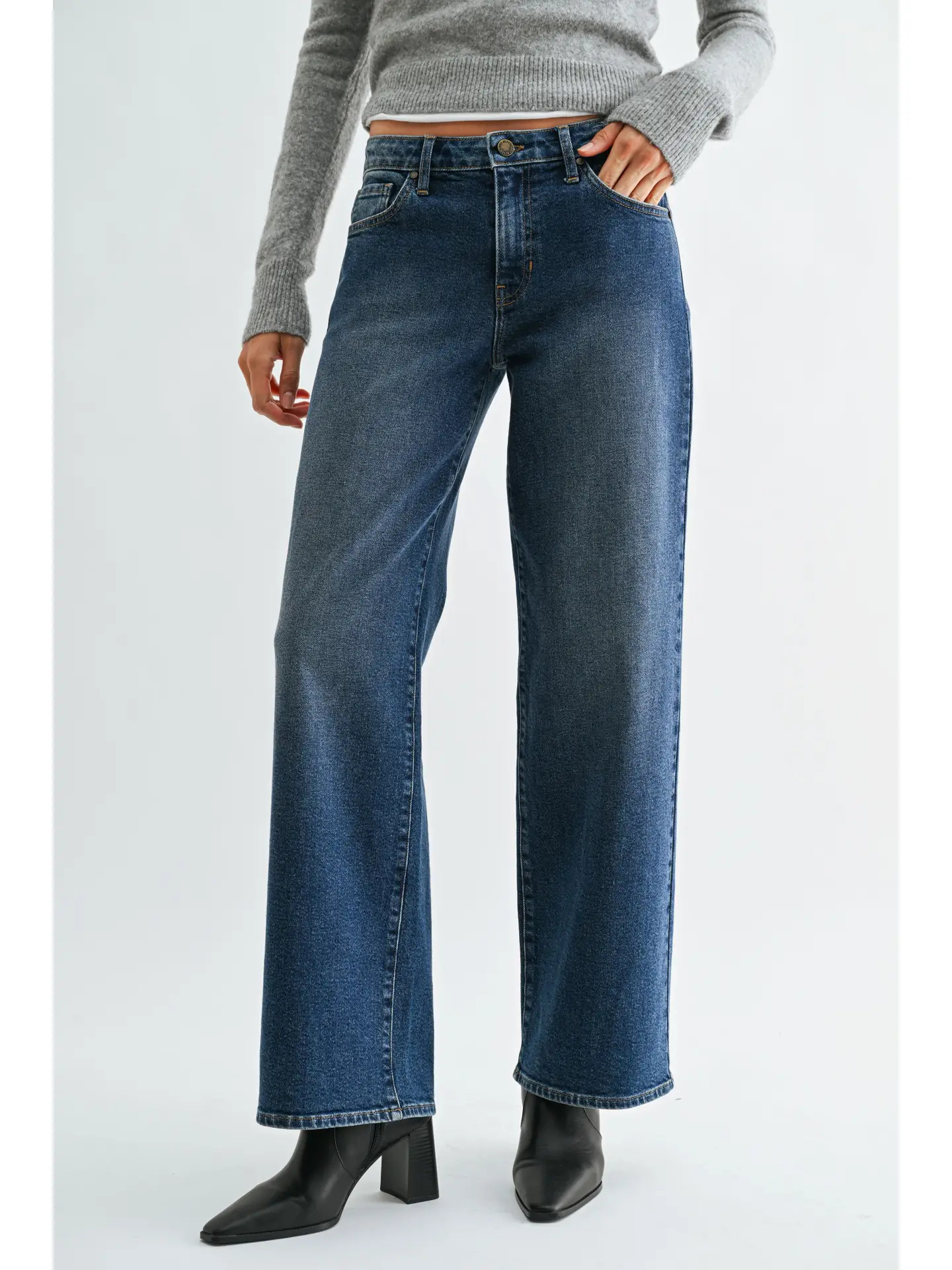
Rise figures are most useful when compared with another pair measured in the same way. For example, the supplied Easy Straight Jean lists a 10.5-inch rise, while the Mid-Rise Slim Wide Leg lists 9.5 inches. That difference can help frame expectations, but it does not guarantee an identical on-body position across different cuts.
Also check whether the number refers to the front rise or another point in the pattern; product specifications do not always use identical conventions. If a chart is unclear, use its fit notes alongside the measurement. Treat the number as a guide to compare, then confirm the waistband placement in a try-on whenever possible.
Match inseam to your footwear
Think about the shoes you expect to wear most often with the jeans. A hem that clears a flat shoe may appear shorter with a different outfit, while a longer inseam can gather or brush the floor. The desired finish might be a clean ankle break, a slight stack, or a hem that nearly meets the shoe.
Try the jeans with more than one shoe if versatility matters. Walk and sit to see whether the hem shifts or catches. For a wide leg, check that the fabric falls cleanly over the shoe; for a narrower leg, observe whether the hem bunches at the ankle. These small checks make a listed length more meaningful.
Account for torso and leg proportions
Height alone cannot determine your ideal rise or inseam. Two people of the same height may have different torso and leg proportions, so the same rise can sit differently and the same inseam can create a different hem position. Compare measurements with a pair that fits your own body, not only with a general height-based suggestion.
If you have a longer torso, a rise that feels comfortable at the waist may differ from what works for someone with a shorter torso. Likewise, the inseam that creates a full-length look depends on your leg length and shoe choice. Use these observations to narrow options, then let movement and garment shape confirm the choice.
Consider cut, hem, and silhouette
A given inseam does not look the same on every silhouette. A straight or wide leg may cover more of a shoe than a tapered leg with the same measurement, while a cropped design is intended to finish higher. Compare the stated inseam with the product’s shape and hem position rather than treating length as an isolated number.
The Raw Hem Barrel Jeans, for instance, list a 12-inch rise and a 27-inch inseam. Those specifications describe that supplied style, not a universal definition of barrel-jean proportions. Use such details to understand one garment, then decide whether its stated rise and length suit your preferred waistband placement and footwear.
Make a confident size-chart decision
Before ordering or entering a fitting room, write down the rise and inseam of a pair you like. Compare those figures with the chart, and check whether measurements are listed by size or remain consistent across sizes. If the chart provides a garment measurement, remember that the jeans’ fit and your preferred ease affect how they feel on the body.
If a pair fits well at the waist but the hem is too long, consider whether alteration would preserve the intended leg shape and hem finish. If the rise feels wrong, changing inseam will not solve it. Prioritise the fit issue that is hardest to alter, and use the label’s care instructions before any care-related decision.
Choosing jeans becomes easier when rise and inseam are treated as distinct tools rather than shorthand for a whole fit. Measure a trusted pair, compare like with like, and test waistband placement and hem length with the shoes you actually wear. Let body proportions and silhouette refine the choice, then trust how the jeans move. A well-considered fit is personal, practical, and repeatable.