For any garment-care suggestion, follow the individual care label first. Read our care guide.
Choosing a jacket is about more than finding a shape or style you like. The hemline determines where the eye pauses, how easily the jacket works with trousers and skirts, and whether it accommodates the layers you actually wear. A useful starting point is to consider your usual outfits and the conditions you dress for, then compare jacket lengths against those needs. There is no universally ideal hem: a cropped style, a hip-length layer, and a longline silhouette can each be the right choice when their proportions and purpose make sense.
Start with the job the jacket needs to do
Think first about when and where you will wear the jacket. For short trips, indoor transitions, or outfits that need a little structure, a shorter layer may be convenient. If you want more coverage over the seat or thighs, a longer cut can feel more practical. The right length begins with use, not a trend.
Consider what you expect to wear underneath, too. A jacket intended to sit over a shirt has different demands from one worn over a substantial knit. Make a mental note of your most common layers, and check that the hem and sleeves allow them to sit comfortably rather than bunching or pulling.
Use your proportions as a reference, not a rule
A jacket hem creates a horizontal line, so its position affects the proportions of an outfit. A hem near the waist can emphasize the rise of trousers or a skirt; one near the hip can create a more continuous line. These are visual effects, not rules about which lengths suit particular body types.
Try the jacket with familiar clothes and look at the complete silhouette in a mirror. Notice where the hem falls in relation to your waist, hips, and the garment underneath. If the overall balance feels intentional, the length is doing its job. You need not choose a cut simply because it is said to flatter a certain shape.
Match the hem to your bottoms
The relationship between jacket and bottom hems often matters more than either garment on its own. A cropped jacket can pair neatly with high-rise trousers, while a longer jacket may work well over slim or straight-leg bottoms. With a fuller skirt or wide-leg trousers, compare how the jacket’s endpoint interacts with the volume below.
Avoid letting two strong horizontal lines compete by accident. If a jacket ends close to the widest point of a skirt or trousers, try a different bottom or adjust the layers beneath it. A small change in rise, tuck, or hem placement can clarify the outfit without requiring a new jacket.
Choose a length for dresses and skirts
When layering over a dress, check whether the jacket finishes above, at, or below the dress hem. A shorter jacket leaves more of the dress visible, while a longer one can create a layered column. Each approach can work; the useful question is whether the proportions look considered and allow the dress to move freely.
For skirts, compare both the jacket’s front and back lengths while standing and sitting. A jacket that appears balanced upright may shift when you move. If you want the skirt to remain the main feature, a shorter layer can preserve its outline. For extra coverage, test a longer cut with the skirt rather than judging it on a hanger.
Account for layers underneath
A jacket should meet the layers beneath it without awkward gaps or excess fabric. Try it over the thickest top you expect to wear regularly, then reach forward, raise your arms, and sit down. These simple movements reveal whether the hem rides up, the body feels restrictive, or an underlayer protrudes in a way you do not want.
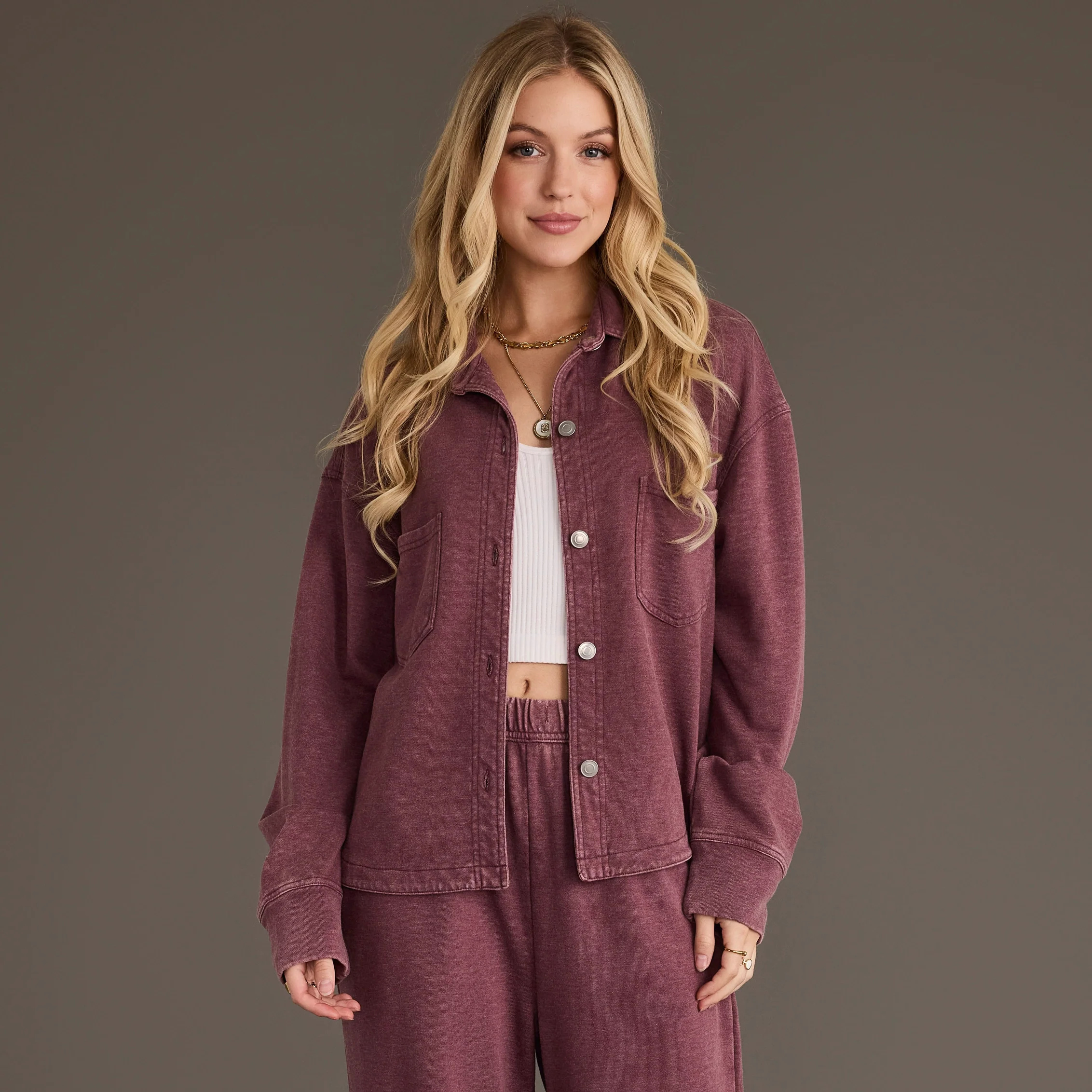
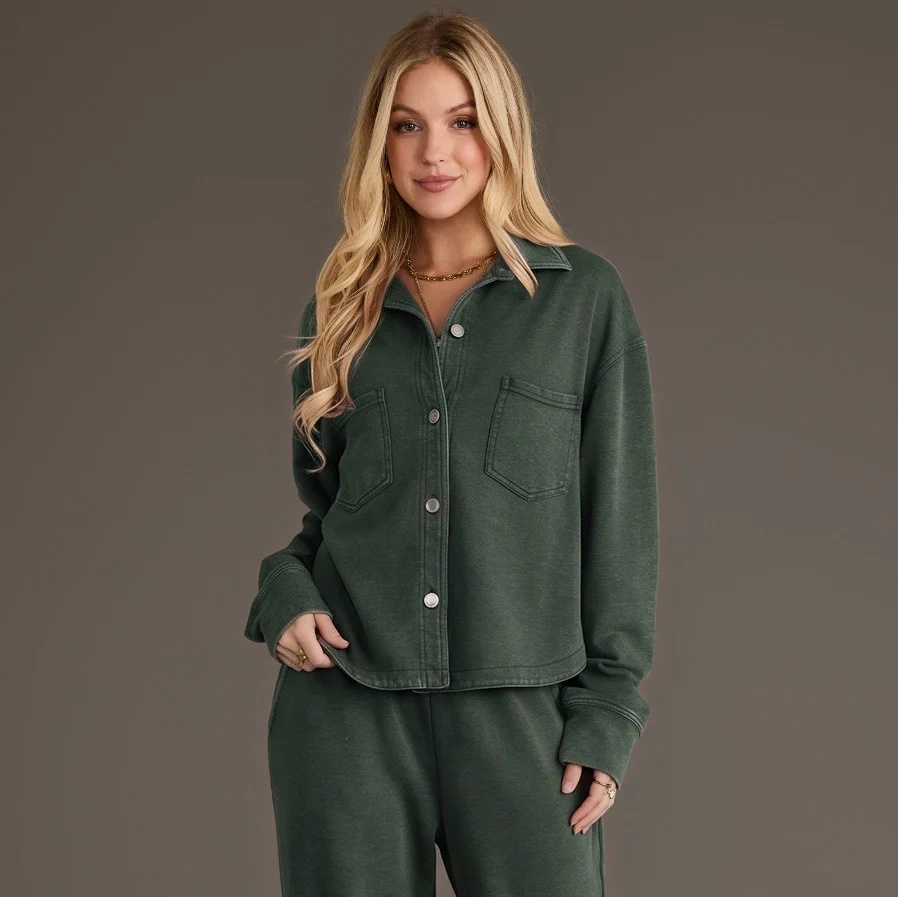
A cropped shacket, such as The Go-To Shacket, illustrates why the intended styling matters: its listed relaxed, cropped silhouette is designed to pair with high-waisted bottoms. Treat that as one styling example, not a universal formula. With any jacket, test the actual length over your own shirts, knits, or other planned layers.
Balance coverage with movement
Longer jackets offer more coverage, but length can affect how freely you walk, climb stairs, or sit. Consider your routine and the jacket’s overall cut. If you commute on foot, bend often, or spend time seated, move around in the garment before deciding that added coverage is worth any restriction.
Shorter jackets usually leave more of the lower body exposed, which may make them easier to move in or wear indoors. That does not automatically make them better for active days. Check that the hem stays in place when you reach and that the back provides enough coverage for the activities you have in mind.
Think about weather and outfit continuity
The climate and your route help determine how much of the body a jacket should cover. For brief outdoor stretches, a shorter layer may be sufficient over your regular clothes. If you expect to spend longer outside, consider whether the hem covers the areas you want protected and whether the jacket works with the rest of your cold-weather layers.
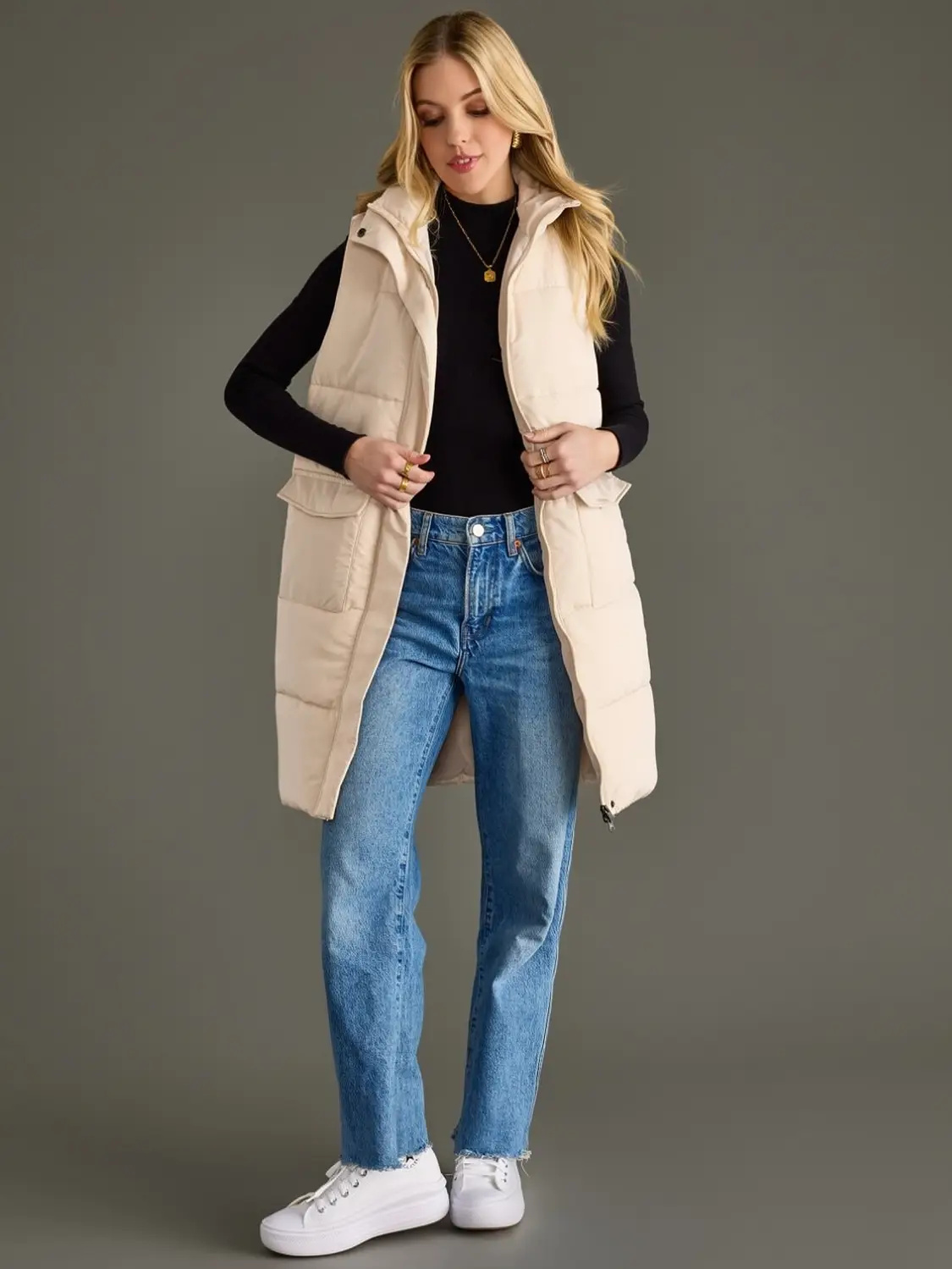
For a cohesive look, pay attention to what appears below the jacket. A longline layer can visually connect top and bottom, while a cropped one draws attention to the waist and the clothes beneath. Choose the effect deliberately, but let comfort and the day’s conditions take priority over a perfectly uninterrupted line.
Check fit and care before you commit
Length cannot be judged apart from fit. Check the shoulders, sleeves, closure, and ease through the body, since these affect where the hem sits and how the jacket behaves when fastened. If you are between lengths, compare both with the same outfit and movement; a hem that looks appealing but limits comfortable layering may not serve you well.
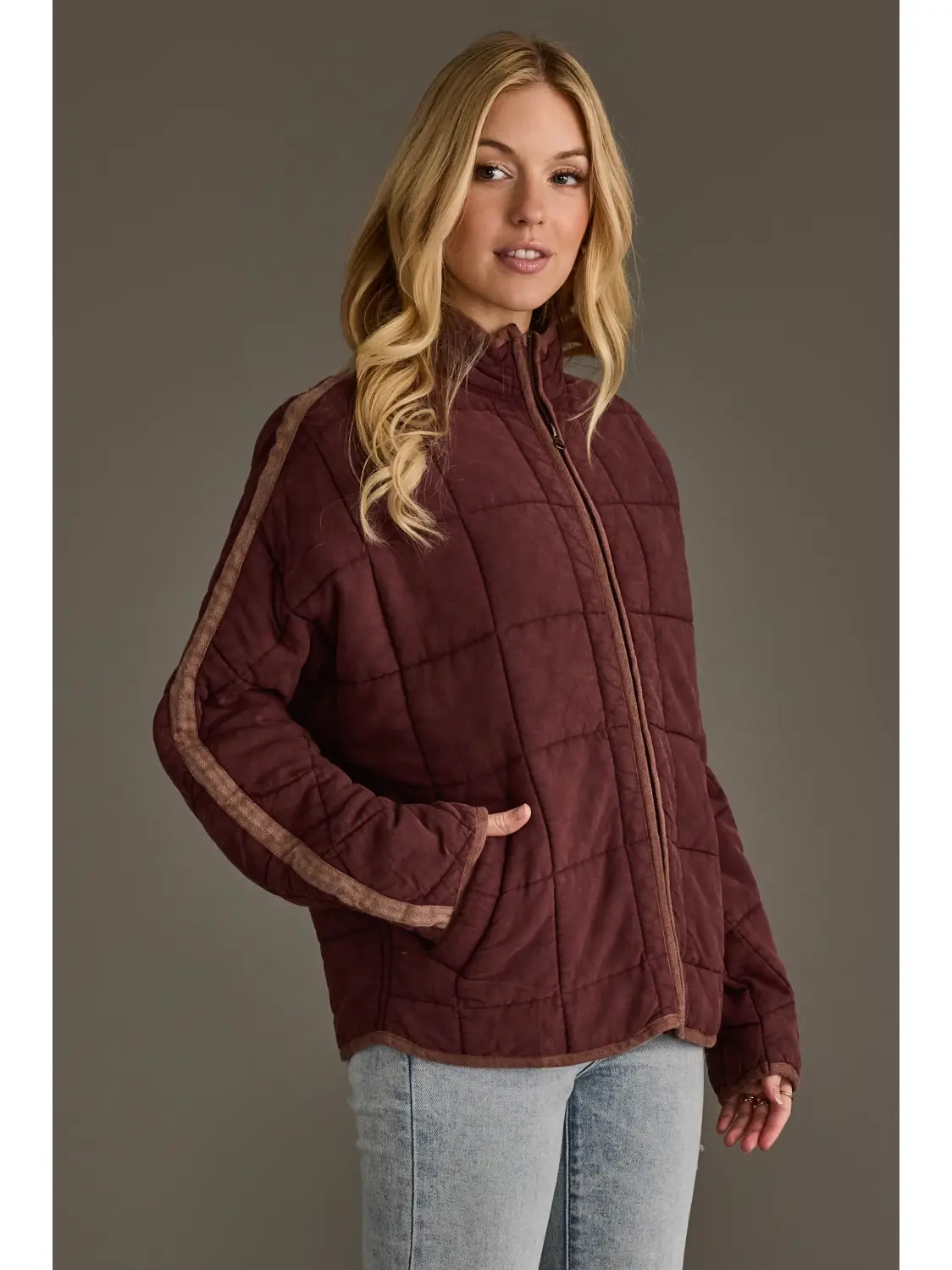
Before cleaning any jacket, follow its care label rather than assuming a method from its appearance. For example, the supplied Quinn Jacket is described as having a relaxed fit and a full zipper, with hand-wash care instructions. That specific guidance applies to that item; another jacket may require different care.
To choose the right jacket length, begin with the coverage and movement you need, then assess proportions, outfit pairings, and the layers you wear most. Try the jacket with real clothes and move around in it; a mirror view alone cannot show how the hem behaves through the day. The best choice is the one that feels balanced, functions for your routine, and earns a place in your wardrobe.