For any garment-care suggestion, follow the individual care label first. Read our care guide.
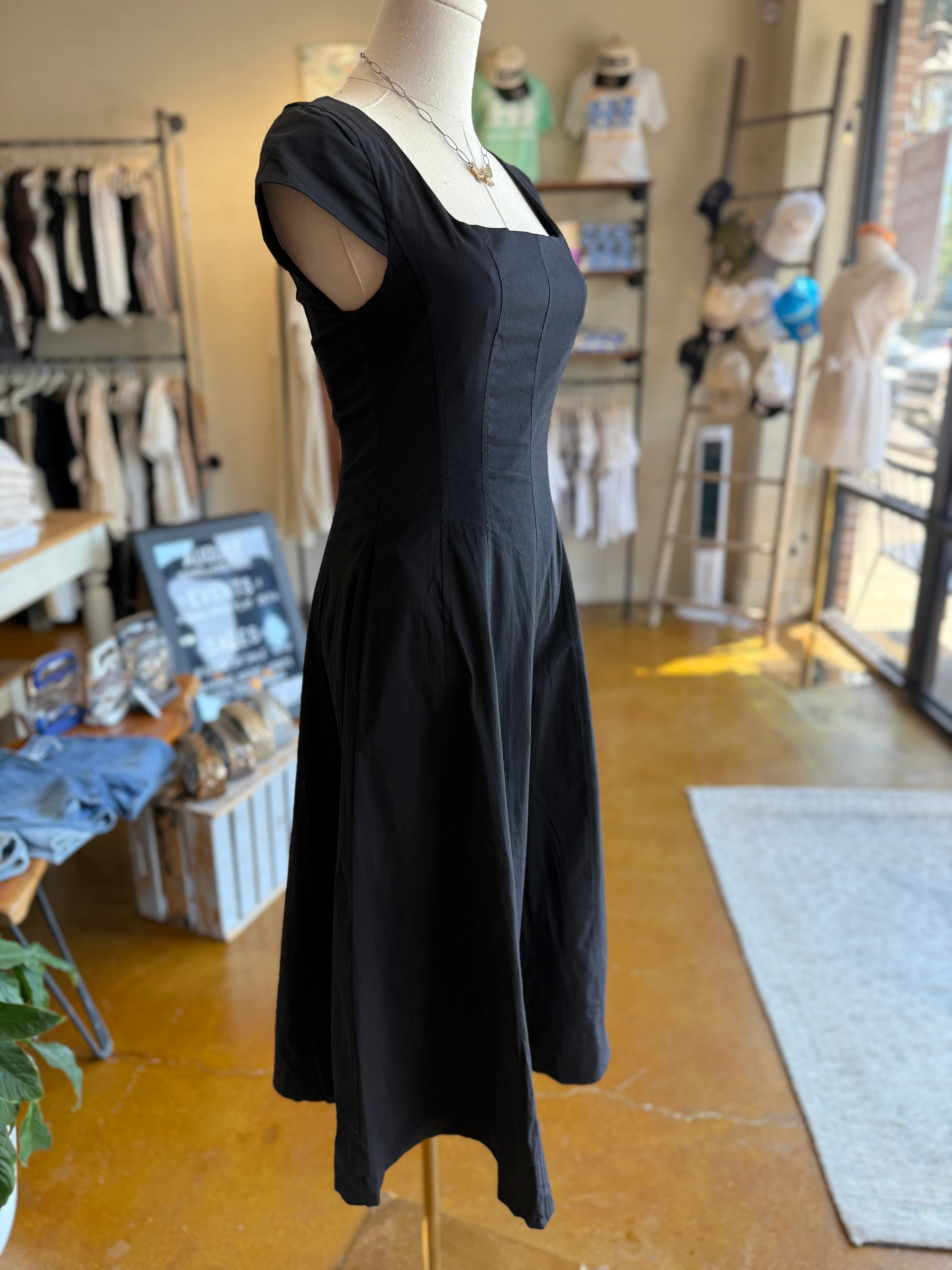
When temperatures drop, a dress offers a graceful starting point—not a reason to pack away your favorite silhouettes. The trick is to add warmth in stages, letting each layer serve a purpose while keeping the outfit easy to move in. Think about proportion, texture, and the day ahead. A few considered choices can make one dress feel right for a cool commute, a breezy afternoon, or a chilly evening.
Start with a comfortable base
Choose a dress that feels comfortable on its own, then consider what can sit smoothly beneath it. A thin, close-fitting long-sleeve top adds coverage without competing with the dress’s neckline or creating too much bulk through the sleeves.
If you prefer not to add a layer underneath, let the dress remain your base and build warmth over it instead. Check your range of movement before heading out: reach, sit, and walk to be sure the layers stay comfortable.
Add a soft layer for indoor warmth
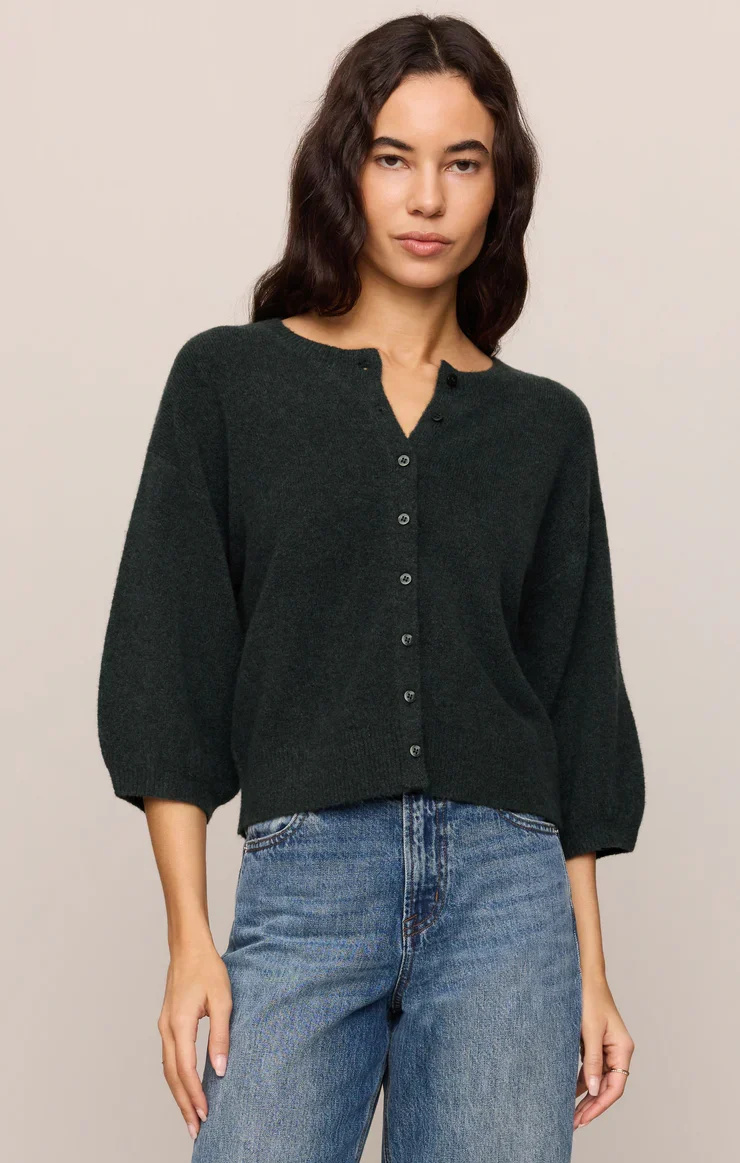
A cardigan is a flexible choice when the day moves between cool streets and heated rooms. Wear it open for a relaxed line, or button it when you want more coverage. A lightweight option can add warmth without overwhelming a midi silhouette.
For a specific example, the Valor Cardigan has a button front, crew neck, and three-quarter sleeves. Its sleeves leave some of the dress visible, creating a natural break in the outfit. Keep the cardigan close at hand if indoor temperatures vary.
Use an outer layer to meet the weather
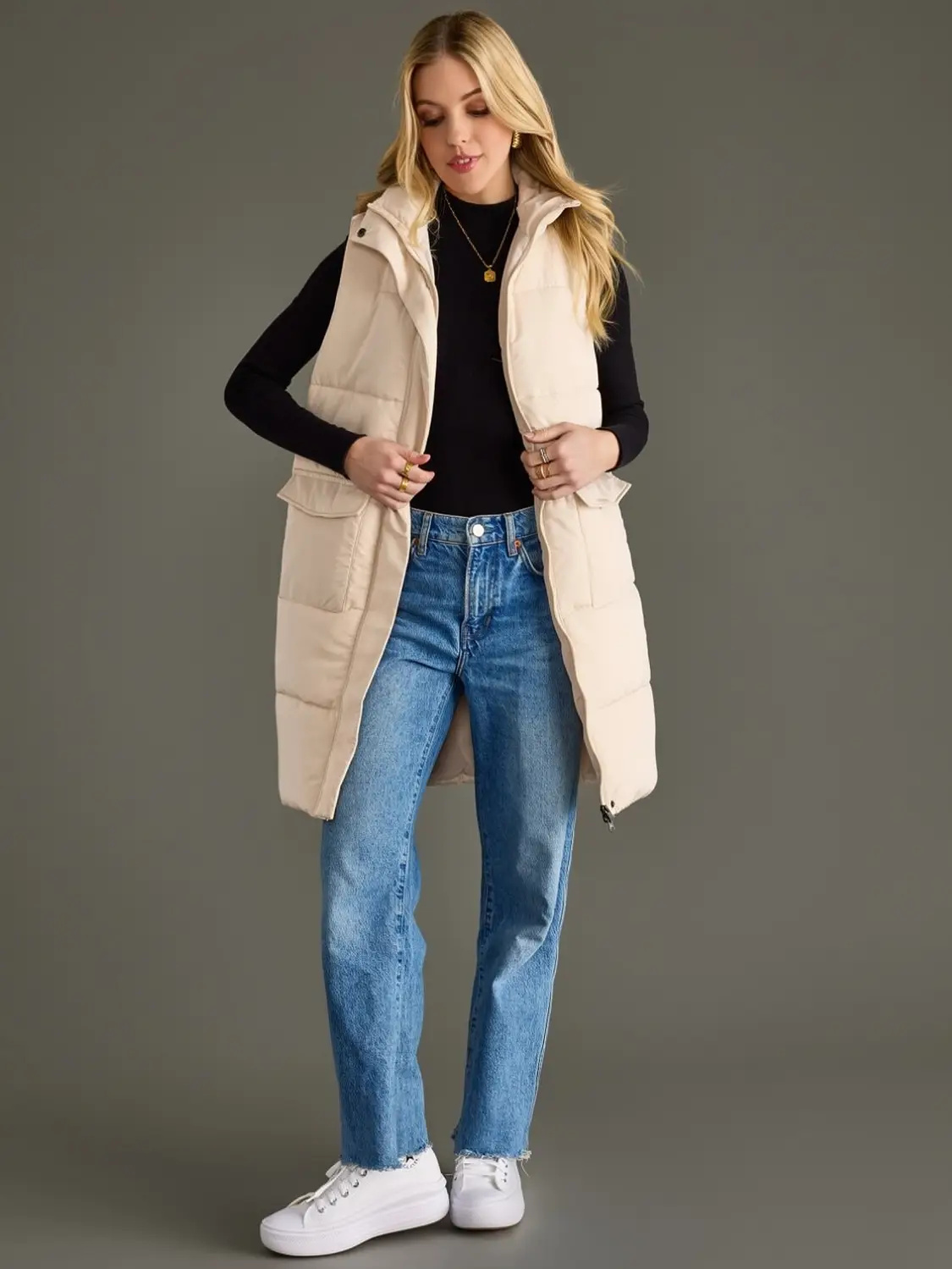
When the chill is sharper, add an outer layer with enough room to sit comfortably over your dress and any cardigan beneath it. A longer shape can create a continuous line, while a high neckline offers extra coverage when the wind picks up.
The Long Puffer Vest is described as a relaxed, longline quilted layer with a high neckline and front zip. If you choose a vest, keep the sleeves underneath comfortable and easy to move in, and consider how the hem sits over your dress.
Balance length, shape, and volume
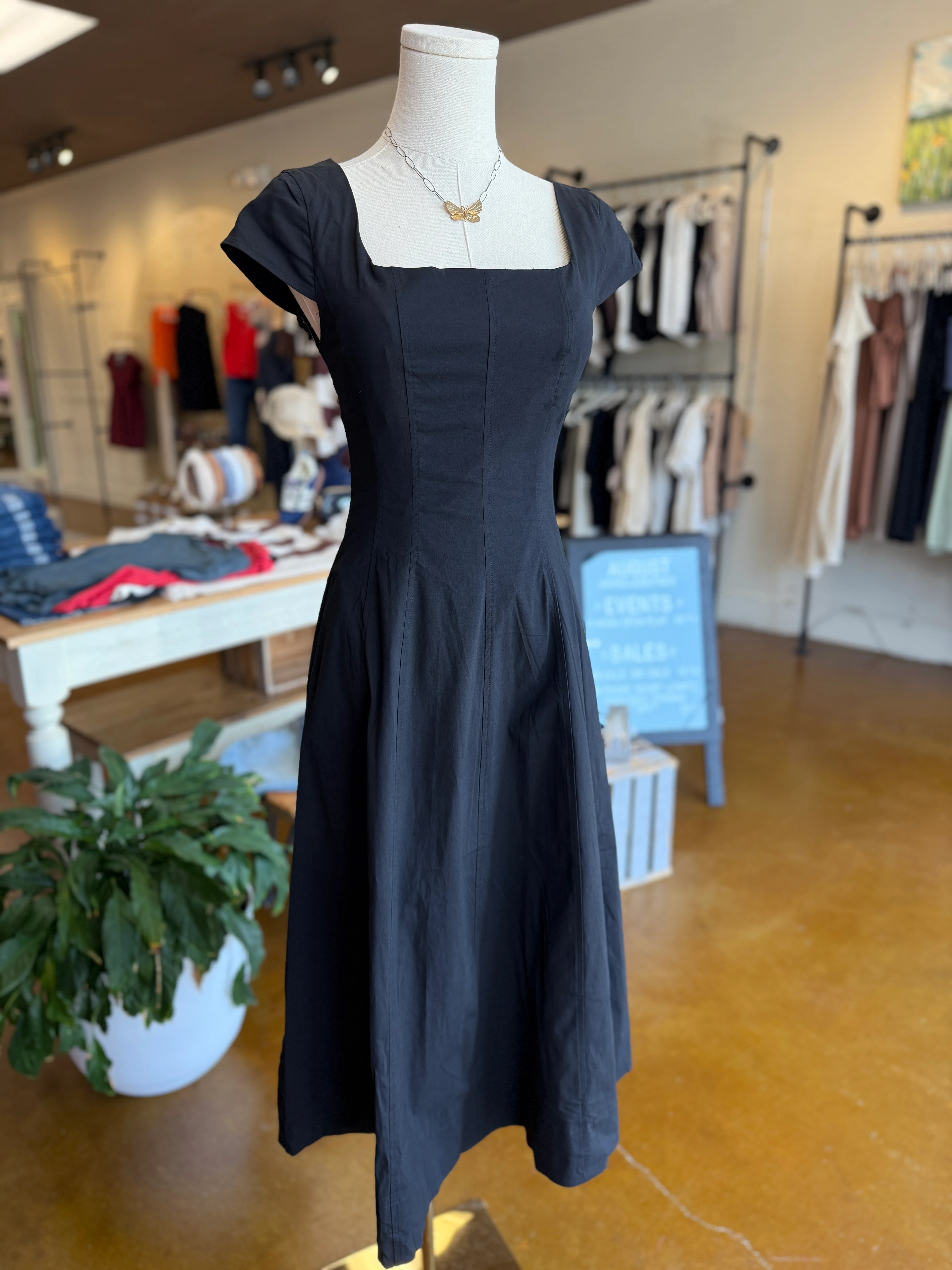
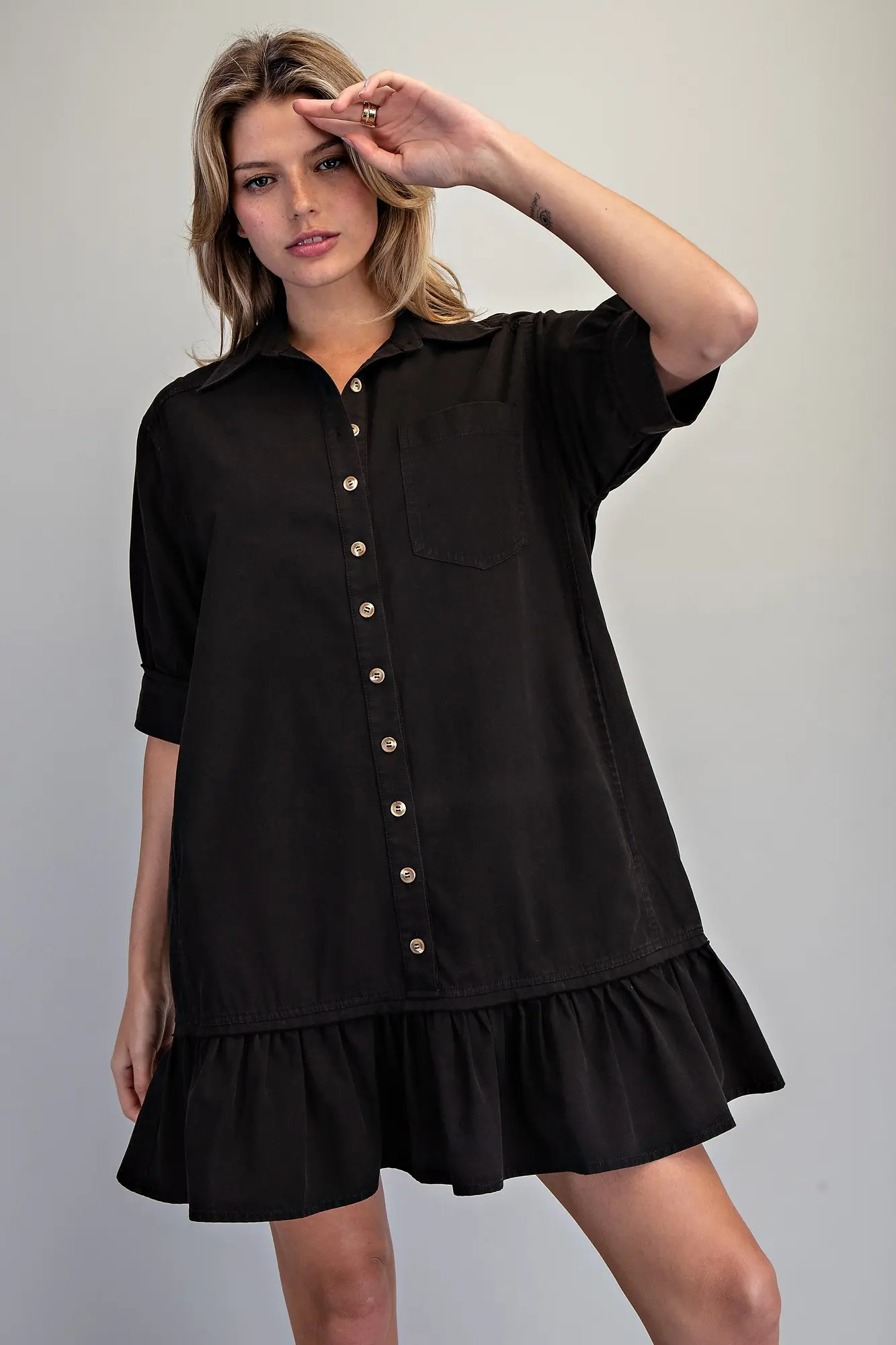
Layering changes a dress’s outline, so look at the whole silhouette in a mirror. If the dress is full, keep the layer above it relatively simple; if the dress is narrow, a more relaxed topper can add visual ease without hiding its shape.
Pay attention to hems as well as waistlines. A cardigan or vest that ends close to the dress hem may create a crowded line, while a clear difference in lengths can feel intentional. Adjust, then walk around to see how the pieces move together.
Finish for changing conditions
Plan for the warmest part of the day as well as the coldest. Choose layers you can remove easily and carry without fuss, and avoid adding so much that you feel overheated once indoors. Comfort is part of a polished outfit.
Before wearing a new combination, check that seams, sleeves, and closures sit comfortably together. For garment care, follow each item’s care label; if it permits washing, follow its specific directions rather than assuming every fabric can be treated the same way.
Choose shoes for warmth underfoot
Cold-weather comfort depends on more than the layers above your dress. Choose shoes that suit the day’s temperature and walking conditions, such as closed-toe flats for a mild commute or boots when streets feel colder. Check that the hem does not catch underfoot, especially when stepping up or moving quickly.
If you wear tights or socks, try them with your chosen shoes before leaving home. A thicker pair can change how footwear fits, so avoid anything that pinches or restricts your stride. For a longer walk, prioritize a stable sole and enough room to move comfortably over a shoe that only works while standing still.
Use tights with intention
Tights can add coverage without changing the dress’s overall outline. Choose their opacity according to the setting and the amount of warmth you need, then consider how the shade relates to both the dress and your shoes. A close tonal relationship can make the transition at the hem feel calm; contrast can make it a deliberate focal point.
Check the waistband and leg length while sitting and standing, since discomfort often appears after you have been moving for a while. If a dress has a slit, test how the tights show when you walk. Keep a spare pair in your wardrobe for occasions when a snag would interrupt a long day, and inspect them in good light before wearing.
Make color transitions feel considered
When several layers meet, a restrained color plan helps the outfit read as one look. Start with the dress, then select one or two supporting shades for visible layers and accessories such as a scarf. Repeating a color in separate parts of the outfit can connect them, while a single contrasting layer gives the eye a clear point of focus.
Consider how colors appear in daylight as well as indoors, where warm lighting can shift their appearance. If you are unsure, lay the pieces together near a window rather than judging each item separately. A small edit often helps: remove one competing shade or choose a simpler layer so the dress remains easy to notice.
Prepare delicate layers between wears
Give each piece a quick check before dressing: look for loose threads, missing fastenings, or small snags that could catch against another layer. Smooth linings and secure closures reduce friction as you move. When taking off a layer, avoid pulling it across a bag strap or rough surface, which can stress delicate areas over time.
For storage and cleaning, follow the garment care label first and use only the methods it permits. If a label allows washing, follow its specific instructions; do not assume a knit or dress can go in a machine. Let items air out between wears when appropriate, and store heavier layers so their weight does not pull delicate pieces out of shape.
A layered dress works best when every piece has a clear role: a comfortable base, a useful middle layer, and weather-ready coverage. Try the combination at home, adjust the proportions, and keep the pieces easy to add or remove as the day unfolds.