For any garment-care suggestion, follow the individual care label first. Read our care guide.
The midi dress has a useful middle ground: more coverage than a short hem, yet easy to adapt as plans change. For real life, styling is less about building a perfect occasion outfit and more about making one piece work across your day. Think about comfort, weather, and where you’re headed; then add layers and accessories that feel like you.
Start with the shape of your day
Before choosing a layer or shoe, picture the route ahead: a commute, a few errands, a desk, or a meal out. That small check helps you decide whether the dress should feel relaxed, polished, or ready for both.
A softly defined waist can make a midi feel finished without much effort, while a straighter silhouette leaves room for movement. Try the dress as it is first, then adjust a tie or add a belt only if it suits your plans.
Make layers earn their place
For cool mornings or air-conditioned rooms, add a cardigan, denim jacket, or light blazer over the dress. Keep the layer easy to remove, and consider its length: a cropped shape highlights the waist, while a longer one creates a quieter line.
When the dress has sleeves or a collar, let those details remain visible rather than crowding them with a bulky layer. A simple outer piece can bring structure to a soft silhouette and make the outfit feel appropriate in more settings.
Choose shoes for the actual itinerary
Shoes change the mood quickly. Flat sandals or simple sneakers can make a midi practical for walking and errands; loafers or low heels lend a more composed feel for a meeting or dinner.
Check the hem with the shoes you expect to wear, especially if you will be moving quickly or climbing stairs. The aim is an easy stride, not constant adjustments. A familiar pair often makes a special-feeling dress more wearable.
Use print and detail with intention
When a dress already has a noticeable print, ruffles, or a distinctive neckline, let that be the outfit’s focal point. Keep other elements simple in shape, so the overall look feels considered rather than overly arranged.
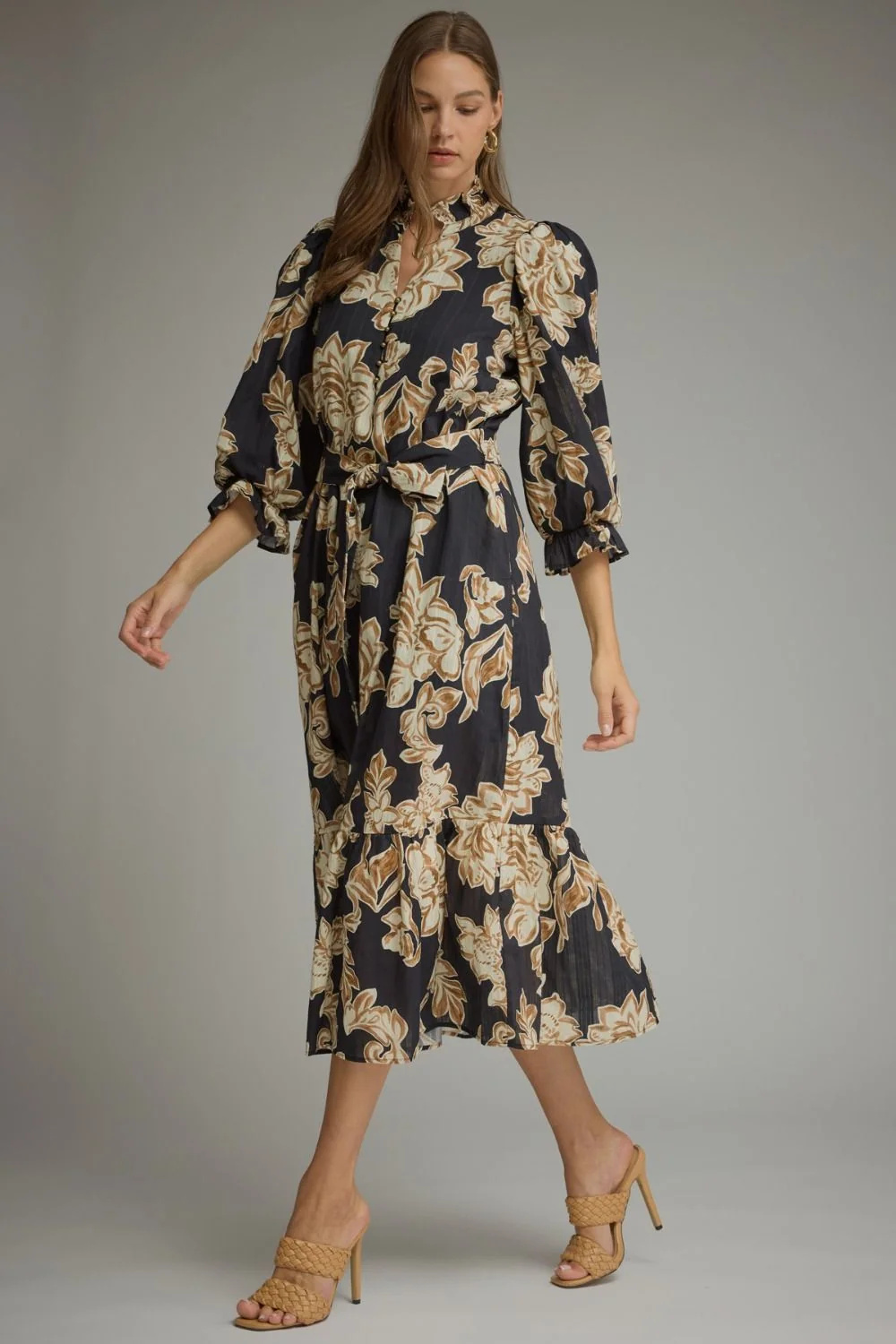
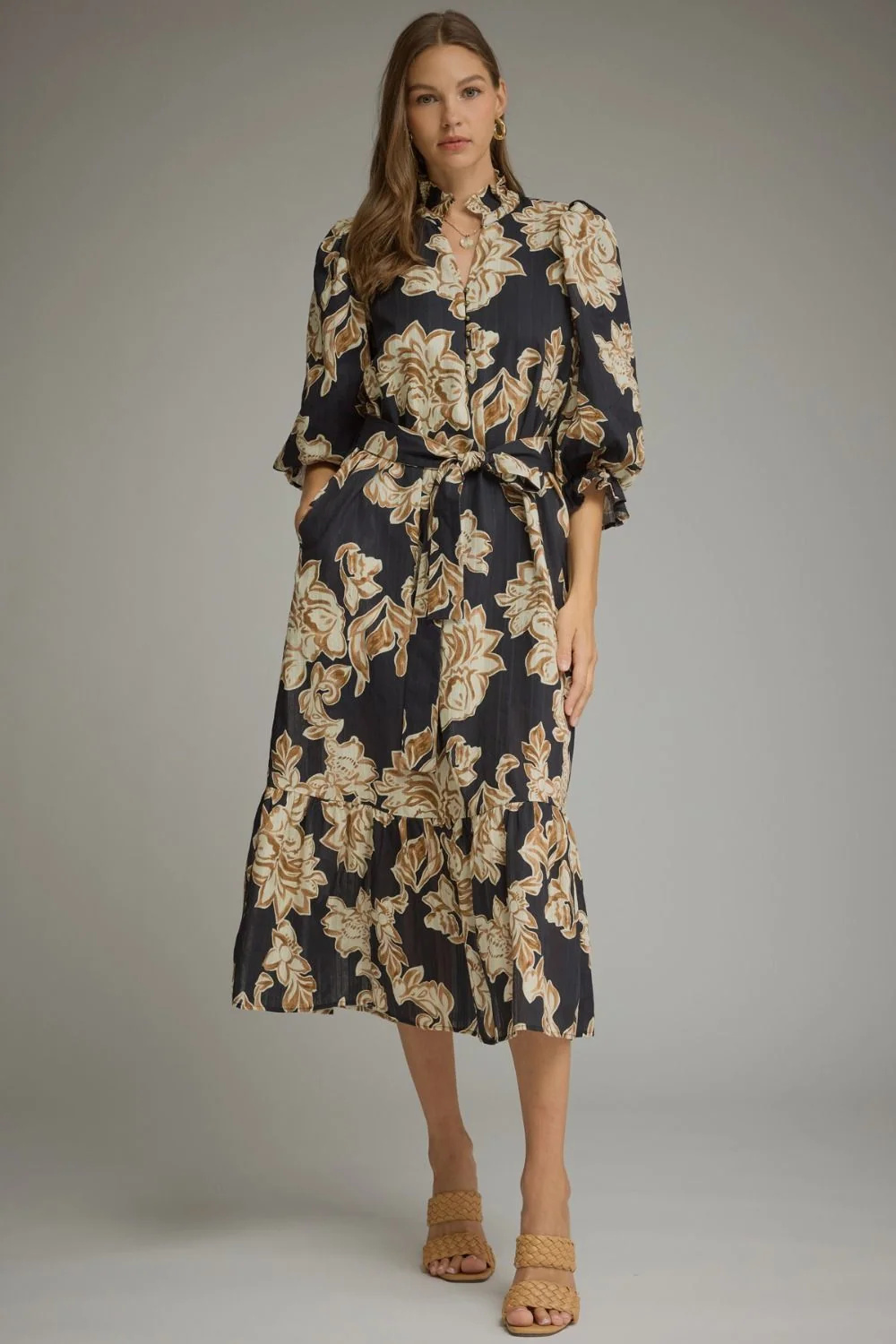
A Likely Story Boutique’s Becky Floral Midi Dress, for example, has a floral print, ruffle details, side pockets, and a removable self-tie belt. Those features offer several styling directions; choose just one detail to emphasize at a time.
Let the occasion guide the finish
For a casual daytime plan, leave the dress uncomplicated and add a practical layer if needed. For a gathering, a neat jacket and more refined shoes can shift the same silhouette without requiring a complete outfit change.
After wearing it, check the care label before cleaning or storing the dress. Follow its instructions, and only use a washing method or product if the label allows it. That simple habit helps you care for different garments appropriately.
Check the hem and proportions
A midi hem can land at different points on different frames, so assess it in a full-length mirror rather than relying on a hanger. Notice where the hem falls in relation to your calf and whether the dress feels balanced with your natural waist. If you are considering alterations, ask a tailor to pin the length while you stand and walk.
Pay attention to the dress’s overall volume, too. A fuller skirt may feel more balanced when the top half stays visually simple, while a narrow silhouette can work with a more substantial bag or outer layer. These are proportion checks, not rules: take a few steps and sit down to see whether the shape still feels comfortable.
Build a small color palette
Choose one or two colors from the dress to guide the rest of the outfit. With a print, pick a quieter shade already present and repeat it in a bag or belt; with a solid dress, use a neutral such as navy, tan, cream, or charcoal as a dependable anchor. Repeating a color helps separate pieces feel connected.
For a wardrobe that mixes easily, note which colors you already wear most often before adding another dress. A shade that works with your usual coats, bags, and tops will likely see more use than one that requires a new set of companions. When uncertain, lay the pieces together in daylight and compare them before deciding.
Make pockets and closures work
Before relying on pockets, test them with the items you expect to carry. Place your phone and keys inside, then walk and sit; a pocket that pulls the skirt to one side may be better for a tissue than for a full day’s essentials. A compact bag can keep the dress from feeling weighed down.
Check buttons, ties, and other fastenings before leaving home, especially if you will be bending or reaching. Confirm that closures stay secure and that a tie does not loosen with movement. For an unfamiliar dress, do a quick trial at home: sit, raise your arms, and take a few steps to catch small annoyances early.
Plan a simple outfit rotation
Give a frequently worn midi dress more than one supporting combination. Keep a short note in your phone or hang a tried-and-tested pairing beside it, such as a work bag and belt on one day, then a relaxed bag and different top layer on another. A small rotation makes getting dressed easier without buying extra pieces.
Between wears, follow the garment care label first, since materials and construction call for different handling. If the label permits airing, let the dress rest in a ventilated space before putting it away; if a mark needs attention, use only a cleaning method the label allows. Store it so the hem is not crushed beneath heavier clothes.
A midi dress earns its place when it feels comfortable across the day, not just in a mirror. Begin with your plans, make one or two useful styling choices, and leave room for the outfit to feel natural. The best version is the one you can move through real life in.