For any garment-care suggestion, follow the individual care label first. Read our care guide.
Tucking a top is a small styling choice with a visible effect: it can clarify a waistline, adjust a hem’s relationship to a waistband, and shape the outline of an outfit. The best method depends on the top’s length and volume, the rise and cut of your bottoms, and how much ease you want to keep. Rather than forcing every shirt into the same treatment, start with proportion and comfort. These practical approaches explain how to tuck tops neatly, when to leave them loose, and how to fine-tune the result.
Start with the outfit’s proportions
Look at the full silhouette before deciding where the hem should sit. A high-rise bottom often benefits from a tuck that reveals its waistband, while a lower-rise shape may feel more balanced with a partial tuck or an untucked hem. The goal is a clear relationship between top and bottom, not a prescribed waistline.
Consider volume on both sides of the outfit. If the bottom has a wide leg or generous shape, a clean tuck can keep the waist visible and prevent fabric from obscuring the overall outline. With a narrow bottom, a softer, looser tuck may create a pleasing counterbalance.
Choose the tuck that suits the top
A full tuck works well when the top is light enough to sit smoothly inside the waistband and you want a defined, uninterrupted front. A front tuck places only the center-front hem inside, leaving the sides and back out. It gives a casual impression and can be useful when a full tuck feels too formal.
A side tuck offers another deliberate option: secure a small section near one hip, then let the remaining hem fall naturally. Use it when you want asymmetry without gathering the entire front. For short or cropped tops, there may be no need to tuck at all; a visible waistband can provide enough definition.
Prepare the waistband and hem
Begin with the waistband in its intended position and check that it lies flat. Smooth the top over your torso, then place the hem inside without twisting it. If the garment has a side seam or a prominent neckline, use those as visual guides so the top remains centered rather than drifting as you move.
For a full tuck, distribute the fabric around the waist in small, even adjustments. Avoid pushing all the excess toward the front or back, where it can bunch. A few moments spent smoothing the hem before fastening or settling the waistband usually creates a cleaner line than repeatedly pulling at the top afterward.
Control extra length without bulk
When a top is longer than the waistband area, first assess how much fabric is actually excess. Fold the hem inward once before tucking, keeping the fold shallow and even. This can reduce visible bulk, but it should not make the top feel tight or pull the hem out when you raise your arms.
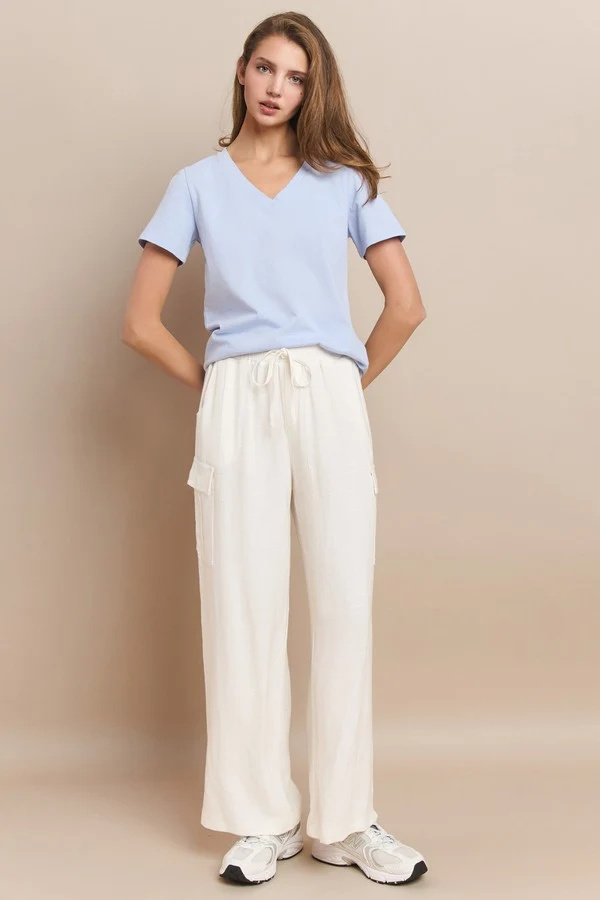
If the fabric continues to bunch, switch to a front or side tuck rather than forcing a full tuck. A relaxed straight silhouette, such as The Basic Tee, can be worn with a partial tuck when you want some waist definition while preserving ease through the body. Let comfort guide the amount you secure.
Make a front tuck look intentional
For a front tuck, choose a small section at the center of the hem and tuck only enough to show the waistband. Keep the tucked area broad enough to look purposeful, but avoid inserting the entire front panel if the sides are meant to drape. Check that the hem falls at a similar level on both hips.
Stand naturally after tucking, then move your arms and sit briefly. These simple checks reveal whether the fabric is pulling or whether the tuck has become too narrow. If it looks accidental, release it and try again with a slightly wider section; a balanced front tuck should appear relaxed, not tightly pinned in place.
Adapt the tuck to wide-leg bottoms
Wide-leg bottoms create a stronger line below the waist, so a tuck can help show where the upper half ends and the lower half begins. A smooth full tuck gives a crisp outline; a modest front tuck softens it. Choose between them according to the top’s volume and the degree of definition you prefer.
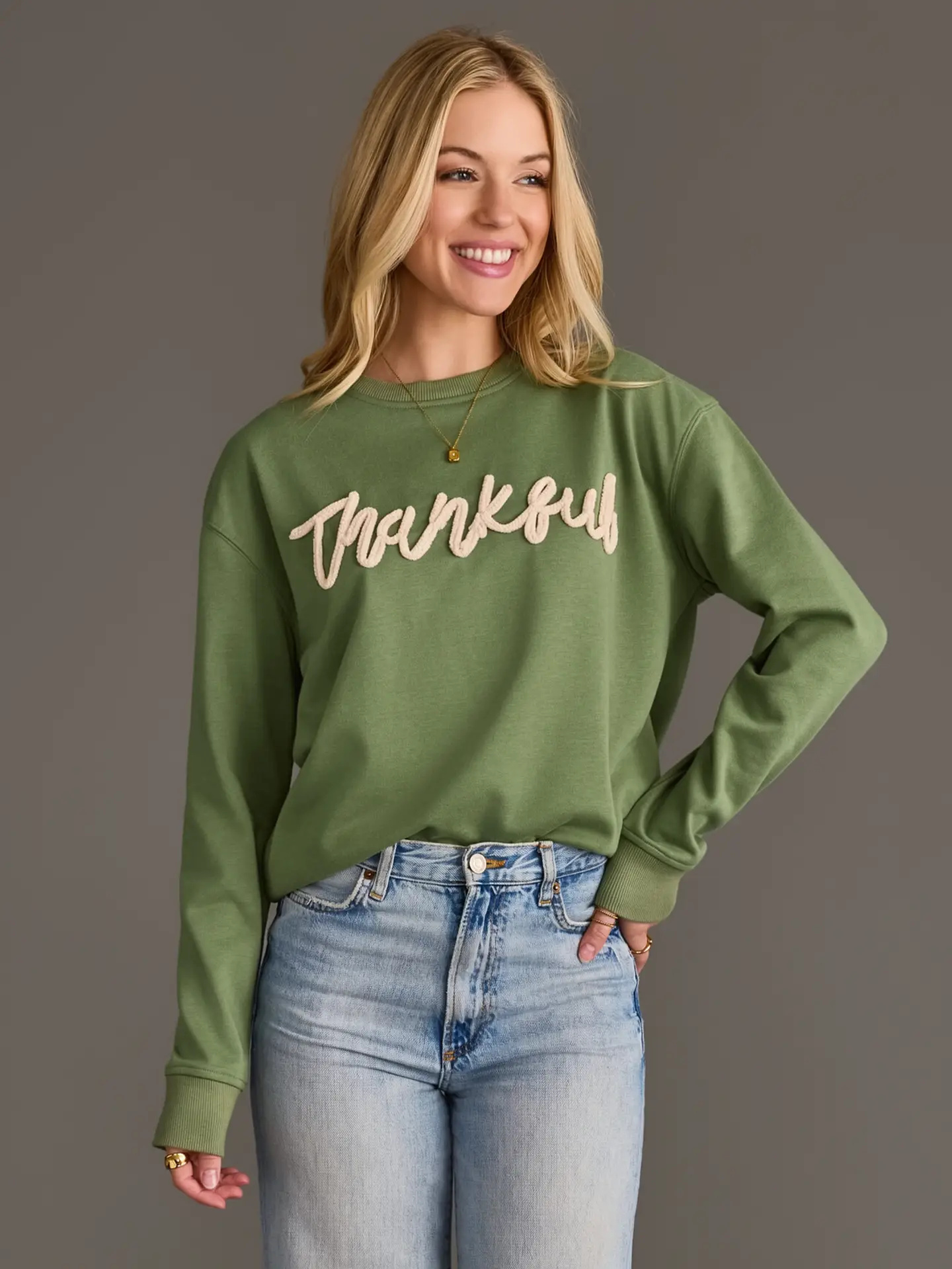
With slim wide-leg jeans, such as the Mid-Rise Slim Wide Leg - Dark, use the rise as your guide rather than tucking automatically. Let the waistband remain visible if it improves the proportions, then check the hem from the side as well as the front. The best result keeps the top and leg shape in visual balance.
Keep a relaxed top from looking sloppy
A relaxed or drapey top does not need to be tightly tucked to look considered. Try a loose front tuck, then gently ease a little fabric back out above the waistband. This creates softness at the waist while keeping the hem from hanging in a single, uninterrupted line over the bottoms.
A lightweight, relaxed shape such as the Sloane V-Neck Top may also work left untucked, depending on the bottoms and desired silhouette. If you do tuck it, use a light touch and check that the drape remains comfortable. The aim is to guide the fabric, not flatten its natural movement.
Check movement and finish
Before leaving, walk, sit, reach, and turn. Notice whether the top pulls across the shoulders, rides out of the waistband, or forms a bulky ridge beneath the fabric. If any of these happen, loosen the tuck, redistribute the excess, or choose a partial version. A good styling adjustment should hold up through ordinary movement.
For garment care, follow the care label first and keep any additional care approach conditional on its instructions. When getting dressed, avoid pulling hard on a tucked hem or stretching the neckline while adjusting it. Gentle, small corrections are usually enough to restore a smooth line without disturbing the rest of the outfit.
A balanced tuck begins with the outfit, not a rule: consider the waistband, the top’s length and volume, and the silhouette you want to create. Use a full tuck for a clean line, a partial tuck for ease, or leave the hem loose when that feels more harmonious. Smooth the fabric, test your movement, and adjust only as much as needed. With a little attention, the tuck looks natural and the outfit feels like your own.