For any garment-care suggestion, follow the individual care label first. Read our care guide.
An invitation arrives, and suddenly every closet option seems either too ordinary or too elaborate. Occasion dressing does not need a new set of rules for every event. Start with what the gathering asks of you, then build a look that feels composed, comfortable, and recognizably yours. The aim is not to outdress the moment; it is to meet it with ease.
Read the room before the rack
Use the invitation, venue, time of day, and host’s wording as your first clues. A daytime garden gathering may call for a softer, lighter-feeling look, while an evening celebration can make a more defined silhouette feel right. When details are unclear, choose polished rather than dramatic.
Think about what you will actually do: sit through a ceremony, mingle standing up, walk across grass, or move between rooms. Those ordinary logistics matter as much as the dress code. A look that suits the setting and your plans will feel more natural all evening.
Choose a familiar silhouette
Rather than testing several unfamiliar shapes at once, start with a dress outline you already enjoy wearing. A midi length, a softly shaped waist, or a straighter line can each feel occasion-ready when the proportions work for you. Familiarity helps you focus on the event instead of adjusting your outfit.
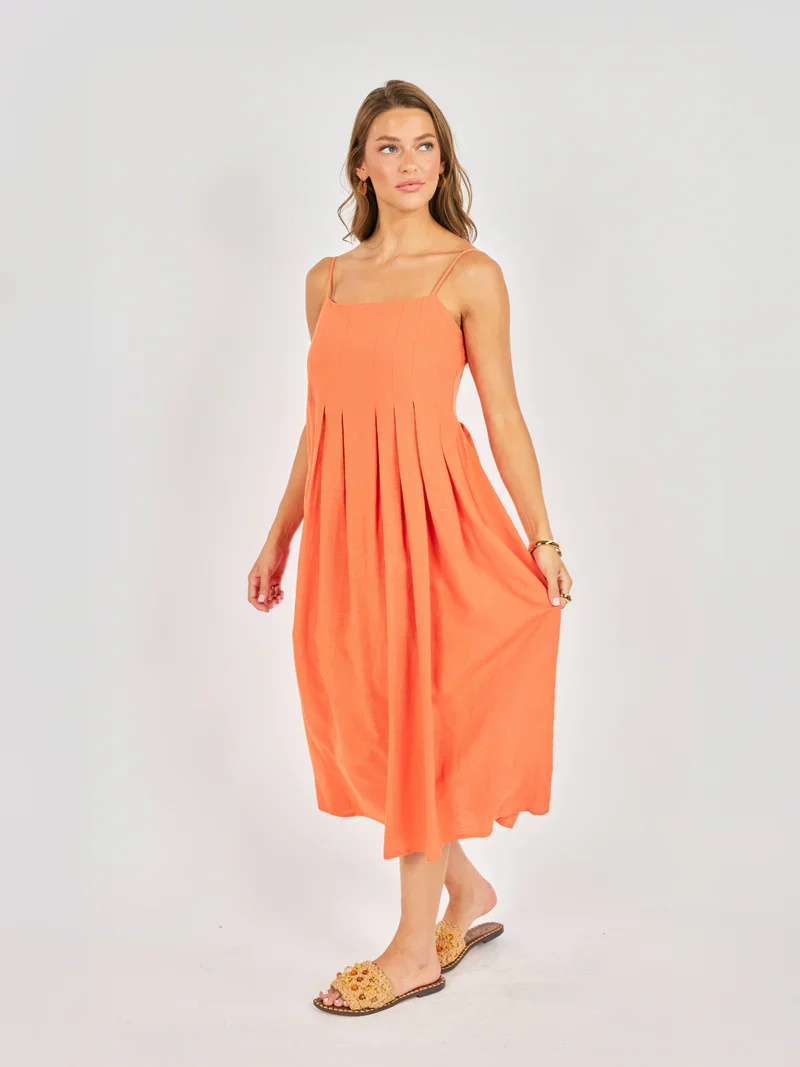
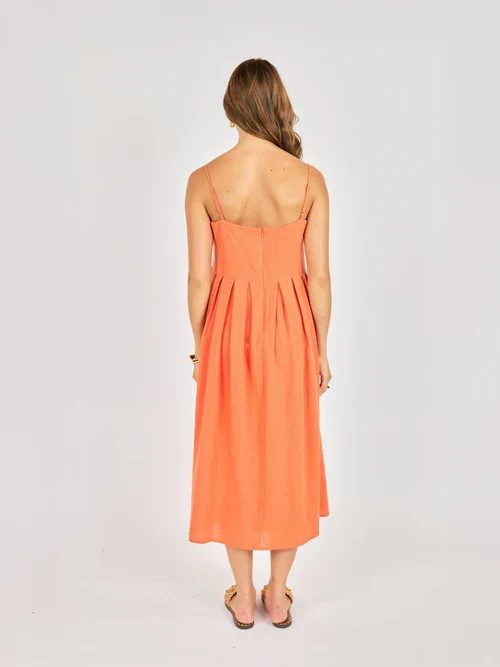
If you are exploring a new shape, change only one element. The Good Day Pleated Midi Dress, for example, pairs a square neckline with a pleated silhouette and adjustable cami straps. Its details offer a clear point of difference without requiring a complicated styling plan.
Let one detail lead
A composed outfit usually needs one focal point, not a collection of competing statements. That could be a neckline, a striking color, a distinct shape, or the movement of pleats. Once you know what draws the eye, keep the rest of the look quiet and let that feature have room.
This approach also makes getting dressed faster. If the dress already has visual texture or a strong silhouette, choose simple complementary layers and shoes. If the dress is more understated, a jacket or a defined shoe shape can add intention without making the outfit feel overworked.
Plan for comfort in motion
Before the occasion, try sitting, walking, reaching, and taking a few steps in your chosen dress and shoes. Check that you can move without tugging at hems or straps. These small tests reveal practical issues at home, when there is still time to adjust the plan.
Consider the temperature and the length of the day, too. A light layer can help when rooms are cool, and a shoe you can comfortably stand in may be the more useful choice. Comfort is not a compromise; it lets you stay present instead of monitoring your outfit.
Make getting ready repeatable
Give yourself a simple sequence: choose the dress, settle on shoes, add a layer if needed, and check the full outfit in a mirror. A brief final check of the hemline and how the neckline sits can catch distractions. Keeping the process consistent removes last-minute guesswork.
Afterward, read the garment care label before cleaning or storing the dress. Follow its instructions first; if it permits machine washing, use only the conditions stated there, and if the label calls for another method, follow that instead. Thoughtful care helps make a favorite occasion look easier to wear again.
Build a small occasion capsule
A compact set of occasion pieces can cover more invitations than a closet full of one-use outfits. Choose a dress that works with at least two existing layers and two pairs of shoes, then note which combinations suit daytime and evening plans. Keep those pieces together in your wardrobe so you can see options quickly without buying around a single event.
Use color relationships to make the capsule feel intentional. A neutral layer can bridge dresses in different shades, while shoes in a tone already present in your wardrobe help separate an outfit from everyday wear. Before adding anything new, try combinations under the lighting you expect; colors can look different indoors than they do near a window.
Use layers to adapt across the day
When an occasion moves from an outdoor ceremony to a cooler indoor meal, a removable layer can make one dress work across both settings. A neat cardigan, cropped jacket, or softly structured blazer can change the impression without requiring a full outfit change. Check that its length sits comfortably with the dress hem and does not bunch when you sit.
Think about where the layer will go once you take it off. If you will be carrying it, choose something light enough to fold over an arm or place over a chair without becoming a burden. If the event includes a coat check, plan for the transition and keep the dress itself complete enough to feel finished on its own.
Coordinate with the people you are dressing alongside
For weddings, family portraits, or group celebrations, ask whether there is a requested palette or level of formality before settling on a dress. Coordination does not require matching everyone exactly. Choose a shade that sits comfortably within the shared direction, then vary texture or tone so the group looks considered rather than uniform.
If you are unsure about a color, compare it with the host’s guidance and the setting instead of relying on a screen image alone. For photographs, avoid choosing a look solely for how it appears in a close-up; consider the full group and background. A simple, clearly communicated plan can prevent accidental clashes without narrowing personal style.
Prepare a backup for small surprises
A tiny repair kit can resolve common wardrobe annoyances without changing your outfit plan. Keep a safety pin, a few discreet fashion tape strips, and a lint-removal option in a pouch or bag. These are useful for a loose hem edge, a neckline that shifts slightly, or visible lint, but test any adhesive on an inconspicuous area first.
Set aside a stain-response plan before leaving: clean tissue or a plain cloth, plus a note of the care label’s instructions. Blot a fresh mark gently rather than rubbing, and avoid applying a cleaning product unless the label permits it. For a problem that could damage the garment, stop and seek appropriate care rather than experimenting during the event.
The most successful occasion outfit is not necessarily the most elaborate one. Let the setting guide your choice, trust a silhouette that feels good, and give one detail the spotlight. With a little attention to movement and a simple getting-ready plan, you can step into the gathering feeling polished, comfortable, and entirely yourself.